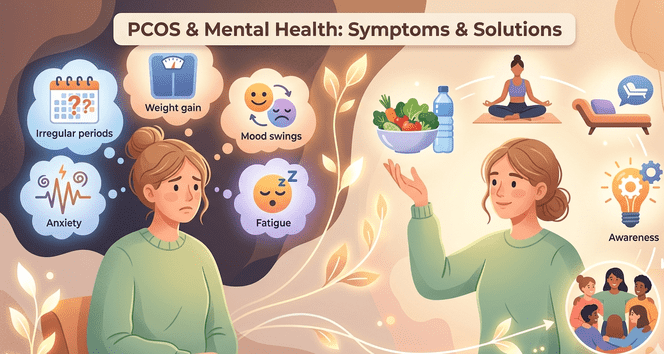
Living with PCOS and Mental Health is not just about periods, acne, or weight gain. Many girls and women also feel emotionally tired, anxious, or low, and don’t understand why.
If you sometimes feel stressed, overthink a lot, or feel sad without a clear reason, it might be connected to PCOS. Many women with PCOS go through mental health issues like anxiety and Depression, but they don’t realize the reason behind it.
Don’t worry—this article will help you understand it in a very simple way and also tell you what you can do to feel better.
Contents
What is PCOS and mental health?
Polycystic Ovary Syndrome is a condition where your body’s hormones are not balanced properly.
Because of this, you may face:
● Irregular periods
● Weight gain
● Pimples (acne)
● Extra hair on face or body
These are physical symptoms, but PCOS also affects your mind and emotions.
Why PCOS Affects Your Mood
Low Energy and tiredness, PCOS and mental health can make your body feel tired all the time.
When your body is tired, your mind also feels:
● Lazy
● Unmotivated
● Low
Body Image Problems
Changes like weight gain, acne, or facial hair can make you feel:
● Less confident
● Shy in public
● Unhappy with your appearance
Stress of Living with PCOS
PCOS is a long-term condition. Managing it daily can feel stressful.
This stress slowly affects your mental health.
Common Mental Health Symptoms in PCOS
Anxiety
● Overthinking a lot
● Feeling nervous or worried
● Not able to relax
Depression
Depression can feel like:
● Always feeling sad
● No interest in anything
● Low energy
Mood Swings
● Getting angry quickly
● Crying suddenly
● Feeling emotional without reason
Low Confidence
● Feeling “I don’t look good”
● Comparing yourself to others
● Avoiding social situations
Sleep Problems
● Not able to sleep properly
● Feeling tired even after sleeping
Why People Ignore These Symptoms
Many people don’t notice this because:
● They think it’s normal
● Doctors focus only on physical symptoms
● Mental health is not talked about openly
But your feelings are real and important.
When Should You Get Help?
You should talk to someone if:
● You feel low for many days
● Anxiety is affecting your daily life
● You don’t feel like doing anything
● You feel very stressed or overwhelmed
You can talk to:
● A doctor
● A counselor or therapist
Simple Ways to Feel Better
Eat Healthy Food
● Eat home-cooked, balanced meals
● Avoid too much junk food
Good food helps both body and mind.
Do Some Physical Activity
● Walking
● Yoga
● Light exercise
It helps reduce stress and improve mood.
Relax Your Mind
- Deep breathing
- Meditation
- Listening to calm music
Talk to Someone
Sometimes you may need:
● Hormone treatment
● Help for anxiety or Depression
This is completely okay.
Small Daily Tips
● Don’t compare yourself to others
● Spend less time on social media
● Write your thoughts in a notebook
● Be kind to yourself
Remember This
If you are feeling this way, it’s not your fault.
Your body is going through changes, and it’s okay to feel this way.
You are not alone, and things can get better with the right care.
FAQ
1. Can PCOS cause overthinking and anxiety?
Yes, PCOS can lead to overthinking and anxiety due to “hormone chaos,” specifically high levels of androgens, which affect neurotransmitters in the brain. Managing the daily stress of a chronic condition also contributes to feeling nervous or unable to relax.
2. Why do I feel sad for no reason with PCOS?
Feeling sad without a clear reason is common in PCOS because hormonal imbalances directly control your mood. Additionally, physical symptoms like fatigue and low energy can make your mind feel “low” or unmotivated.
3. How do PCOS and mental health affect body image and confidence?
Visible physical symptoms such as weight gain, acne, and facial hair (hirsutism) can make women feel less confident and unhappy with their appearance. This often leads to comparing oneself to others and avoiding social situations.
4. Is “Brain Fog” a symptom of PCOS?
Yes, many women with PCOS experience what is known as “Brain Fog,” which is often linked to insulin resistance and unstable blood sugar spikes. This can lead to a lack of focus and mental fatigue.
5. Can lifestyle changes improve PCOS-related depression?
Small daily changes can significantly help. Eating balanced, home-cooked meals; engaging in light physical activity, such as yoga or walking; and practicing relaxation techniques, such as meditation, are effective ways to improve both mood and physical health.
6. When should I see a doctor for PCOS and mental health issues?
You should seek professional help if you feel low for many consecutive days, if anxiety is interfering with your daily life, or if you feel completely overwhelmed. Talking to a counselor or a doctor is a positive step toward feeling better.
Conclusion
Polycystic Ovary Syndrome affects both your body and your mind. Understanding this Connection is the first step to feeling better.
With small lifestyle changes, support, and proper care, you can manage both your physical and mental health.
👉 Take care of your mind as much as your body. You deserve to feel happy and healthy.