Nowadays, we keep almost everything our photos, money, and private messages on our mobile phones. This makes security more important than ever. In the past, we relied only on ‘Passwords’ or ‘Patterns,’ but hackers and cyber-thieves have now found ways to break them easily.
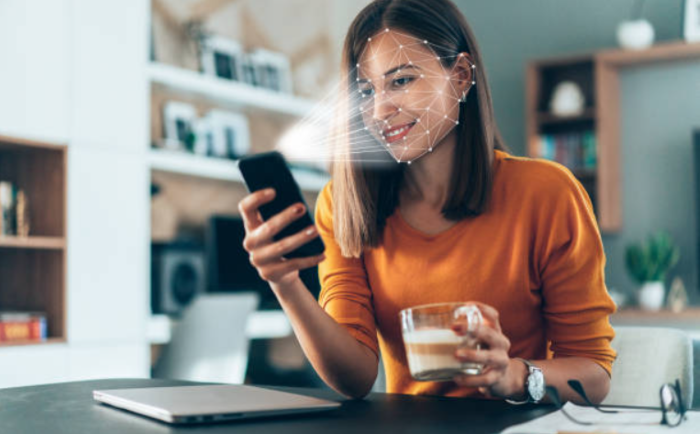
This is why Face ID (Facial Recognition) is becoming so popular. This technology started as a simple way to unlock expensive smartphones, but today, it is protecting big banks, airports, and hospitals. Instead of a word or a code, it uses your unique facial features, scanning thousands of points on your face that are impossible to copy.
In this article, we will explain in very simple terms how ‘Face ID Verification‘ is changing the way we protect our information and making different industries much safer for everyone.
Personal Experience: I still remember the time I forgot my banking password while traveling. It was frustrating and stressful. But when I switched to Face ID, that headache disappeared. Just one quick glance at my phone, and I was in. That moment made me realize that Face ID isn’t just a “cool feature” it’s a lifesaver for our busy digital lives.
Contents
How Does Modern Face ID Work?
Unlike basic photo matching, modern Face ID uses Liveness Detection and 3D Depth Sensing. It captures thousands of invisible dots to create a mathematical model of the face, ensuring that a high-resolution photo or a digital screen cannot spoof the system. This anti-spoofing technology ensures that only a real, living person can gain access.
5 Best AI Productivity Tools to Crush Your 2026 New Year Resolutions
Key Use Cases Across Major Sectors
1. Banking & FinTech: Beyond Simple Login
The finance sector has moved past simple authentication. Today, Face ID is used for:
- High-Value Transactions: Authorizing large transfers without needing an OTP.
- Digital Onboarding (KYC): New customers can open accounts 80% faster using real-time face matching.
- Anti-Deepfake Measures: New AI algorithms now detect if a “video call” is a deepfake or a real person.
2. Healthcare: Securing Patient Data
- Patient Identification: Preventing medical identity theft by matching patients to their records.
- Secure Access: Doctors use biometrics to access sensitive health records instantly.
- Pharmacy Safety: Ensuring medications are only handed to the verified patient.
3. Travel & Border Control: The “Paperless” Journey
Airports are transitioning to “Biometric Corridors.”
- Seamless Boarding: Passengers can walk to the aircraft without showing a physical passport.
- Smart Gates: Automated gates verify travelers against e-passports, reducing wait times by 40%.
4. Retail: Contactless Pay
- Face-to-Pay: “Smile-to-Pay” kiosks allow users to complete purchases just by looking at a camera.
- Theft Prevention: AI systems identify known shoplifters in real-time to alert security.
The Challenges: Privacy and Ethics
While the technology is impactful, it faces hurdles:
- Data Privacy: Companies must be transparent about where biometric data is stored (On-device vs. Cloud).
- Bias & Accuracy: Ensuring the algorithm works well across all skin tones.
- Regulations: Adhering to laws like GDPR and CCPA is now mandatory.
FAQ
Is Face ID safer than a Fingerprint sensor?
Yes. Modern Face ID uses 3D mapping. The chance of a random person unlocking your Face ID is nearly 1 in 1,000,000, compared to 1 in 50,000 for a fingerprint.
Can Face ID recognize me with a mask or glasses?
Yes. Advanced systems in 2026 focus on the unique features around the eyes (periocular region) to verify you even with a mask.
What happens if someone uses a photo of my face?
Modern systems use infrared light and 3D sensing. A flat photo has no depth, so the system will automatically reject it.
Is my facial data stored on a public server?
Most companies use “Mathematical Hashing.” Your actual photo is never stored; only a complex code is kept, ensuring high privacy.
Final Thoughts
Face ID is no longer a futuristic concept; it is a business necessity. As we move towards a “passwordless” future, facial biometrics will be the primary key to our digital lives.